Sustainable agriculture
Impact farming
At Cool Impact Farming, we understand impact as a way of working.
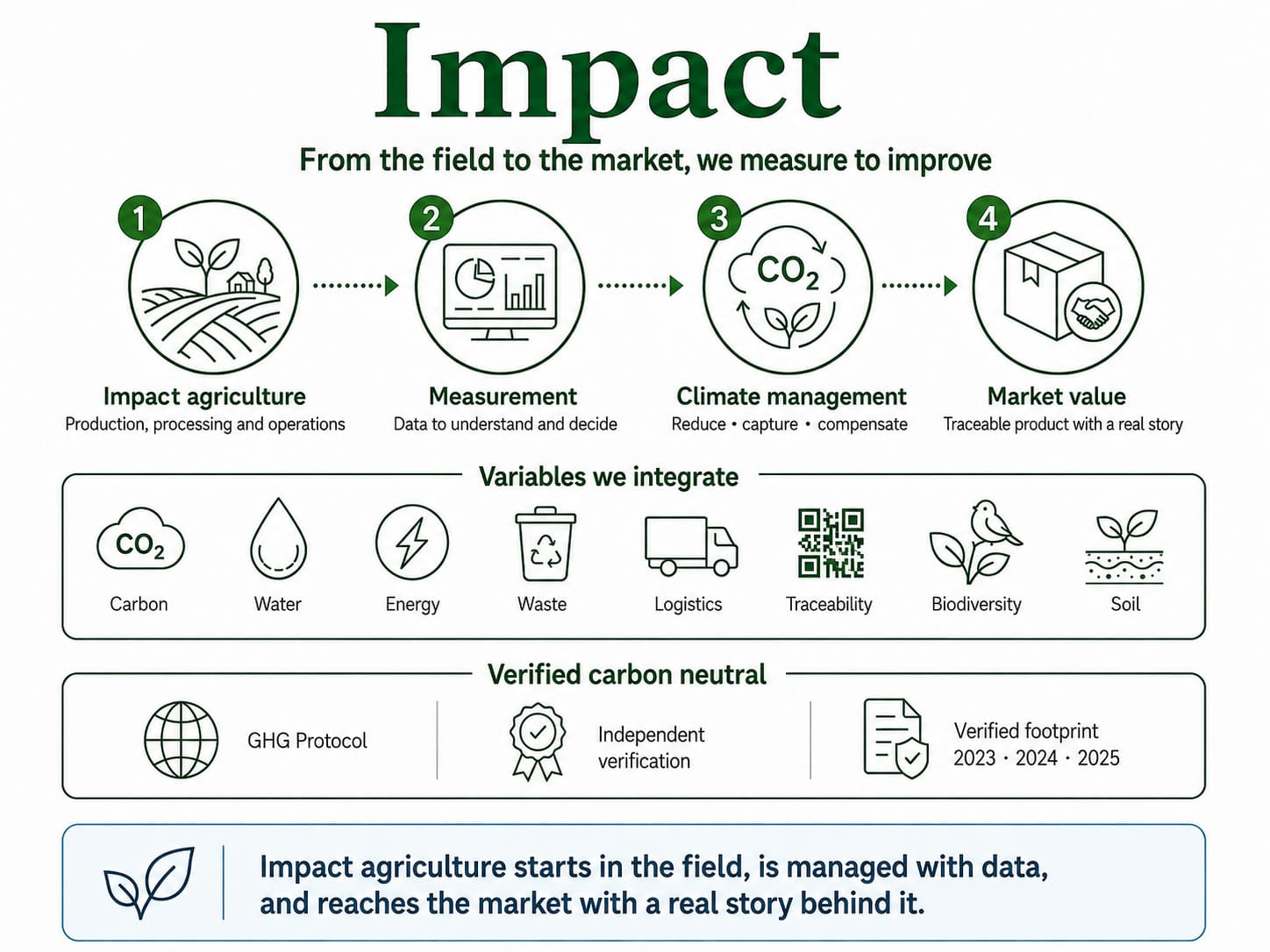
It is not only about producing fruit, but about measuring how it is grown, how it is processed, how it is preserved, how it is transported, and what footprint the entire operation generates.
Our model connects agricultural production, operational efficiency, carbon, water, energy, waste, logistics and traceability. Every decision within the chain can reduce impact, improve efficiency and strengthen product value.
Impact farming starts in the field, is managed through data and reaches the market through products with a real story behind them.
Carbon neutrality
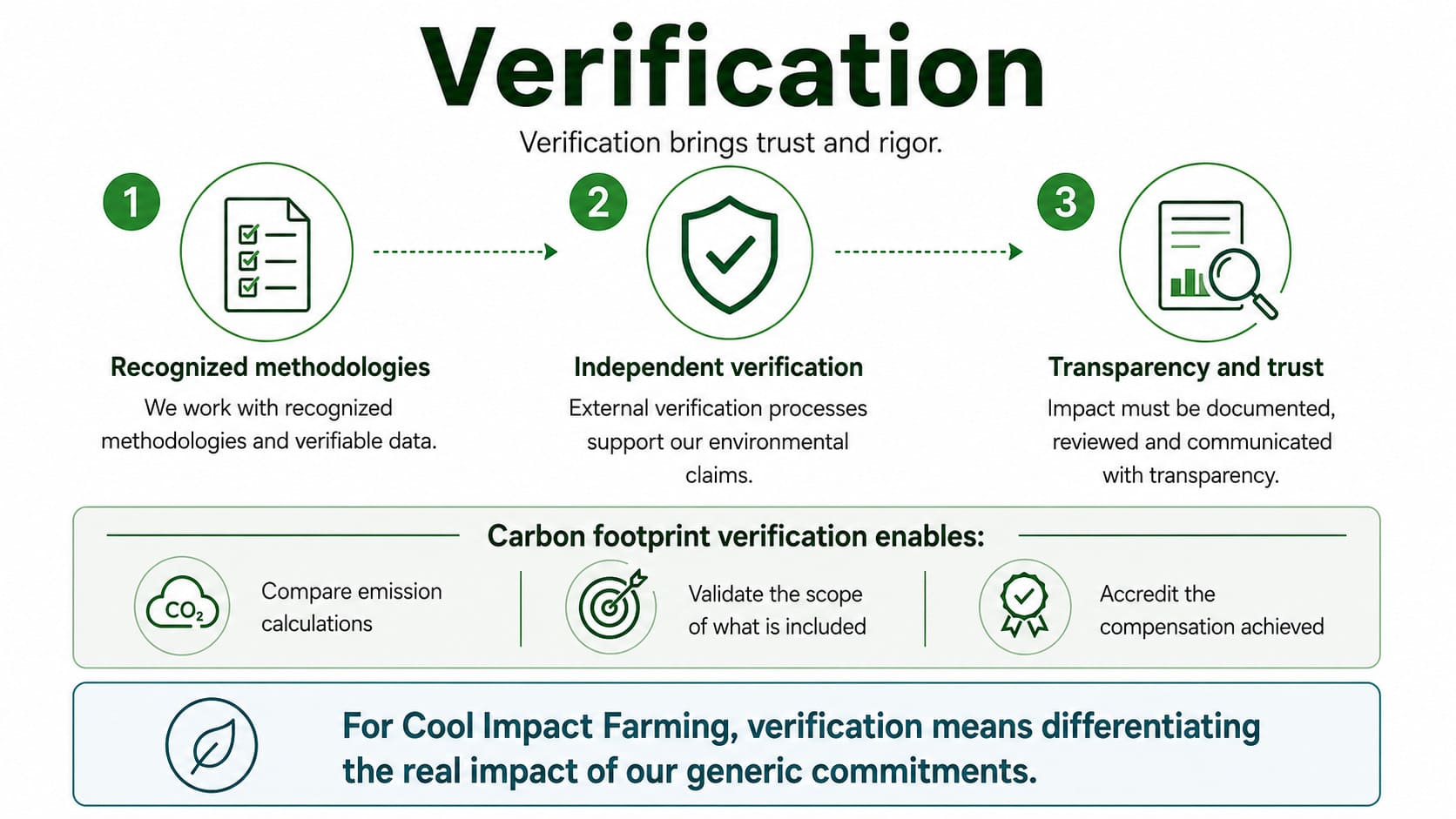
Our carbon neutral model has been recognized at European level and certified through independent carbon footprint verification under the GHG Protocol.
The carbon footprints associated with kiwi and blueberry production have been verified by APPLUS for 2023, 2024 and 2025 in the case of blueberries, and for 2025 in the case of kiwi, including direct and indirect emissions from agricultural and operational activity.
This process allows us to measure, reduce and offset emissions in a documented way, integrating carbon neutrality into the company’s real management model.
For Cool Impact Farming, being carbon neutral is not only about offsetting emissions. It means understanding our footprint, reducing it wherever possible and offsetting what cannot yet be avoided.
Carbon capture
Carbon capture is part of the potential of regenerative agriculture.
Through permanent crops, cover crops, soil improvement and organic residue management, farms can help retain carbon and improve the natural fertility of the agricultural system.
Capturing carbon means working with soils that are more alive, more stable and more resilient.
Better-managed soil helps produce better, conserve water more effectively and strengthen each farm’s capacity to adapt.
Measurement
Measurement is the first step towards improvement.
We calculate the carbon footprint of our operations to understand where emissions are generated and how we can reduce them.
Measurement includes direct and indirect emissions related to agricultural and operational activity: fuel consumption, machinery, electricity, fertilization, water, transport, distribution, waste, business travel and employee commuting.
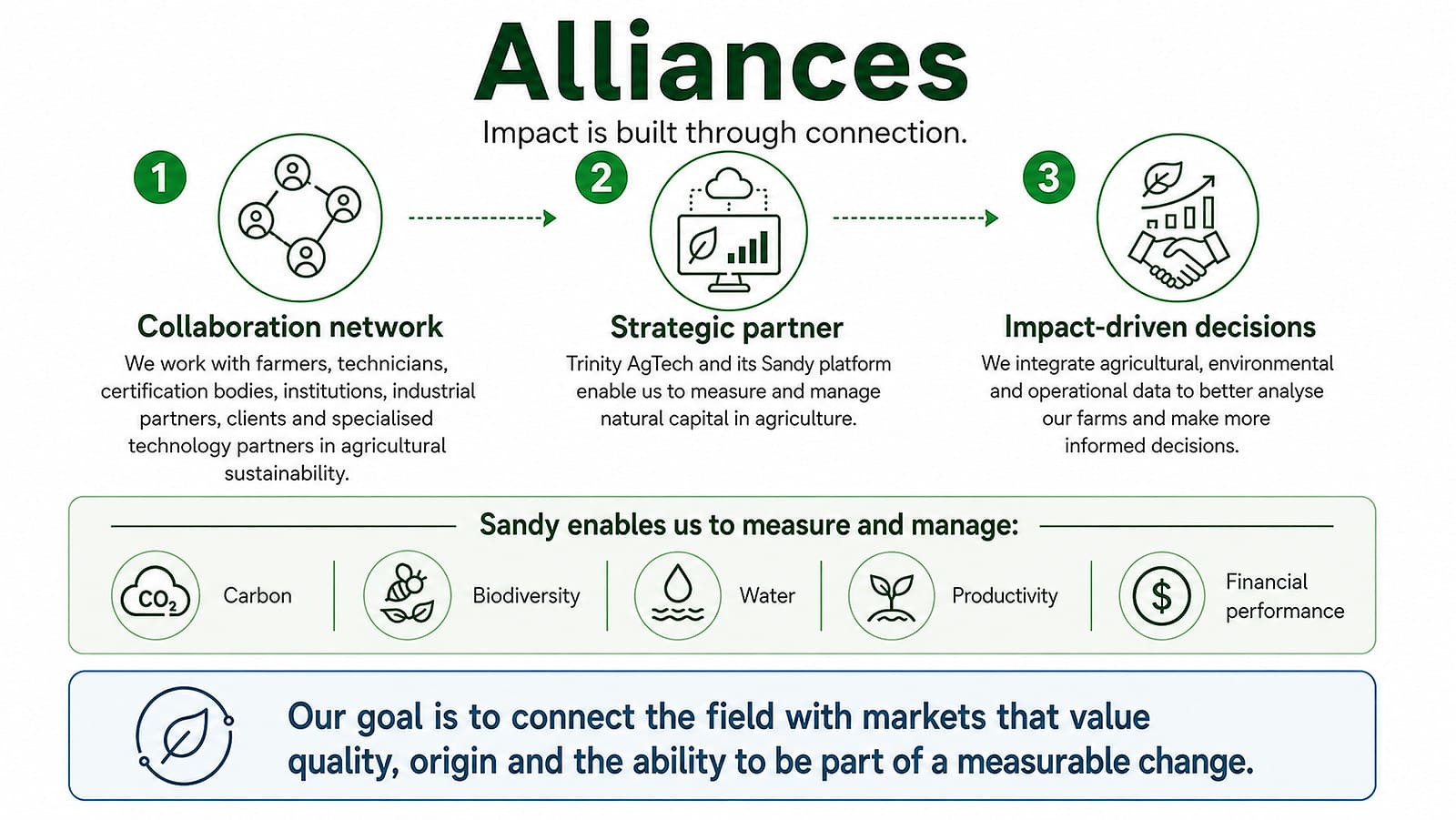
In addition to measuring carbon, we are moving towards a broader vision of agricultural impact, incorporating indicators related to biodiversity, water, soil and natural capital.
Measurement allows us to move from intention to action. It turns sustainability into a management tool and helps us build products with clearer, more traceable and more transparent information.